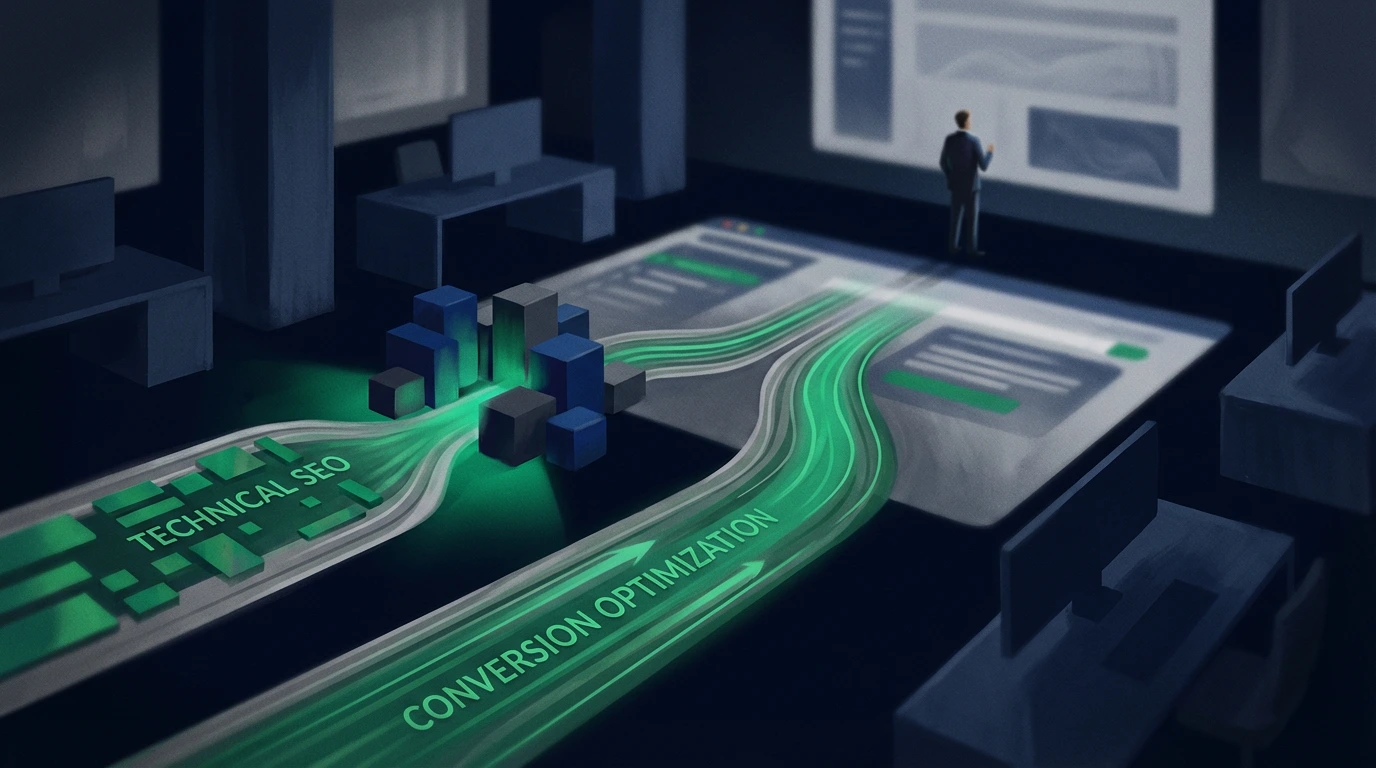
Technical SEO or Conversion Optimization? The Bottleneck Test to Get More Leads
Business owners often hear two arguments all the time: - “Technical SEO first.” - “Conversion optimization first.”
Both can be true.
But the expensive part is guessing.
The bottleneck test (use this on a single priority page)
Your goal is simple: find out which problem is blocking action.
Phase 1: Technical gate check (access + understanding)
Ask: Can search engines reliably reach and interpret this page?
Tech-first is the right move when you see gate failures like: - crawling/indexing issues you can’t explain - rendering problems that change what users actually see - page speed/UX breakdowns that kill trust - structural issues that prevent the page from being understood
If part of the gate failure is slow mobile performance, the conversion impact is exactly what’s broken down in 5 Mistakes That Kill Your Website Conversions.
To validate this quickly, run Website Analyzer and focus on whether the page is eligible to win and consistent to interpret.
If you want to refresh the technical “why,” use Website SEO Audit Checklist as your reference points.
Phase 2: Conversion intent check (decision readiness)
Now ask: Does the page earn the click—and does it convert the right visitor?
Conversion-first is the right move when: - the page gets impressions/clicks - but submissions/calls are low - users bounce before reaching proof/CTA - the page feels informational for a decision query - internal links send visitors to the wrong next step
This is where Meta Analyzer becomes valuable: your title/description must match intent, or attribution will look “random.”
If the snippet looks fine but calls/forms still stay low, you’re likely dealing with the “next step” and messaging problems covered in Why Your Website Isn’t Generating Leads (And How to Fix It).
Step 3: Use the tool ecosystem (so your decision isn’t opinion-based)
A clean workflow: - Website Analyzer: check structural/technical + opportunity signals - Meta Analyzer: confirm snippet promise + meta alignment - Keyword Generator: confirm you’re targeting decision intent that matches the page you’re improving - AI SEO Analyzer: sanity-check whether interpretation coverage matches modern “answer” expectations
You don’t need to use all of them every time. But you do need enough signal to avoid the classic trap: fixing the wrong bottleneck.
Step 4: Apply the “best of both” sequencing
If you want the fastest lead improvements, use this order for your top page: 1) tech fixes that prevent access/understanding (only what matters) 2) rewrite the first screen promise (so it matches intent) 3) add proof and objections before the CTA 4) improve internal linking paths so users move toward booking
If you need a conversion structure blueprint, High-Converting Website Structure helps keep updates aligned with lead behavior, not design taste.
And for messaging that removes uncertainty, Website Messaging Strategy is the fastest education route.
And if your bottleneck is actually “page type mismatch” (people arrive expecting a landing but you send them to a generic page), the decision logic is here: Website vs Landing Page: Which One Does Your Business Actually Need?.
Final takeaway
Technical SEO and conversion optimization aren’t competitors. They’re prerequisites in the right order: - Tech = access - Messaging + structure = decisions - Internal links = funnel movement
If you fix the bottleneck first, you get more leads without rebuilding the whole site.
What to do next
Run the bottleneck test like an ordered checklist:
- Pick one priority page that should generate leads.
- Run Website Analyzer and check whether the page can be reached and interpreted reliably.
- Then run Meta Analyzer to verify the snippet promise matches the conversion next step.
- If you need to prove what’s working, connect this to lead outcomes using SEO Attribution for Small Businesses: Prove Which Pages Generate Qualified Leads.
*** End Patch